 Since their merger in 1994, the London Diamond Bourse and Diamond Club are located in the diamond centre of the British capital, in Hatton Garden, the most expensive street in the city (otherwise called Diamond Street) concentrating all London boutiques selling diamond jewellery. The largest British Barclay’s Bank is seated right under the London Bourse neighboring De Beers’ headquarters in Charterhouse Street and the business part of London known as the City located quite nearby.
This street turned internationally known after the discovery of diamonds in South Africa in 1865: before that time it harboured 13 diamond jewellers, whereas by the end of the century their number went up to 90. A bankers’ syndicate provided for diamonds supply from South Africa to London.
In 1940, when the Second World War was on, the diamond community of Antwerp moved to London seeking for security and a more reliable place for trade. At that time, the DTC and CSO, which firmly set their offices here, maintained connections all over the world, including many refugees, - so by the end of the war London became a world diamond hub.
The London Diamond Club opened in the end of 1940. The London Diamond Bourse was established at the same time and flourished in the post-war years. In the 1970s the Bourse accounted for 700 members. In the 1990s the Bourse and the Club deemed it necessary to merge which gave birth to a united organization – the London Diamond Bourse & Club.
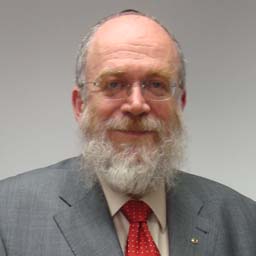
President of the London Diamond Bourse & Club Freddy Hager looks more like Santa Claus than a diamond oligarch or a business tycoon. It is easier to imagine him sitting in a chair in front of a fireplace among his children and folks than in the office. Although it is clear that it is not the bright expression and disarmingly kind smile on his face but his business and managerial qualities that made him a leader of the diamond society and a top executive of the WFDB (Freddy Hager, the former Chairman of the Trade and Promotion Committee in the Federation, in recent years holds the position of Deputy Treasurer General).
However, charisma has never hindered anyone’s promotion.
In the Russian language there is a cliche: “How did you come to living such a life?”
I actually studied economics, and I was not sure which path I really want to follow. My father at the end of his life was in the diamond business – yet he was not in the diamond business most of his life. When he went to diamonds he became ill and passed away quite suddenly. And I was left with the situation I inherited. While dealing with this state I was more and more caught up with diamonds, I fell in love with diamonds. So the romance started in the early 1970-s, and in 1974 I came into the business full time. And I’ve been working in the diamond business since then. I learned the business. Also I decided I want to go into the business, so I went to Israel. I learned with a company, quite large in Israel, basically small diamonds - sorting and grading diamonds. Later I represented them in London selling diamonds on the London market. Then I got involved with other companies; the branches I got involved with dealt with bigger and more expensive stones – which I’m dealing with in present time. At that time I became a member of the Diamond Bourse since I started my own business. And I got interested not so much in the political side as in the social side and helped the industry - trying to do something for the industry at large. So I got on the Board of Directors of the Bourse and then I got its President. At that time, there used to be two bourses in London – the London Diamond Bourse and the London Diamond Club. And there were a lot of historic reasons for that but it was my ambition to have the two organizations joined and it was achieved in the 1990-s becoming one bourse. That’s the story.
Is there any difference in the functions of the President of the Bourse and the Club?
The Bourse and Club exist since the 1940s. The bourses in Belgium and Holland are much older. But the London Bourse is one of the oldest. It’s not a new organization. It opened its doors to the diamantaires and dealers fleeing the ravages of war-torn Europe. Since that time we deal only with the economic challenges. Originally, in the 1940s-1950s the Diamond Bourse members dealt with polished diamonds and the Club members were dealing with rough diamonds. They were two different branches of the trade. As the rough diamond trade in London declined, there was less and less cutting and polishing here, but there were more merchants dealing in polished diamonds, precious stones and jewellery, and we welcomed all people involved in the jewellery business, mainly diamond people.
What are your functions as President?
I am heading the Board of Directors, smoothing and running the work of the association. We have the rules and we enforce them. People having difficulties and problems come to us and we provide judgment, if you like, trying to make sure everything runs smoothly. We are the association to look after our members, to see the members comply with the rules and ethic line. They are taking full advantage of what we have done to modernize the premises and, to a certain extent, virtually to “reinvent” our organization. The trading floor facilities are now splendidly equipped, offering to all members a comprehensive, comfortable, high-tech and ultra efficient business environment, which is also secure. The advantages arising from membership are by no means restricted to the enjoyment of our in-house facilities. Members subscribe to and are bound by a rigorous code of ethics and best-business practice. Additionally, the LDBC acts as a trade organization active in promoting the interests of all in our industry. Moreover, we are members of the World Federation of Diamond Bourses, an umbrella organization, to which all the world’s 29 bourses (in 20 countries) subscribe. We created the World Diamond Council. In the 1990s-2000s we dealt with the problem of conflict diamonds – and dealt with it very successfully.
What is there more in the position of the Bourse’s top executive – honour or responsibility?
Responsibility, of course. When people have problems they come to us.
Is it always easy to solve complicated matters addressed to you?
Yes. We have arbiters and all Board of Directors have experience in the trade. So we can often solve certain problems - which could lead, if taken outside, to very expensive investigations and lawyers taking a lot of money - because we understand the trade from inside and can do it more quickly and efficiently, I think.
How do they get such experience?
Just by practice. When you are involved in business, when you are rising in it you gain a certain amount of intelligence absorbing necessary knowledge.
Is your bourse in any way different from other bourses – maybe in some traditions?
Not really. Every country differs in its habits, but they are basically and surprisingly similar in many ways. If we look at the Diamond Dealers Club in New York and Diamond Bourses in Antwerp and Israel - just taking these three examples - you’ll see pretty similar atmosphere and the similarity is very strong. As far as the Diamond Club is concerned, it’s not a club in the social sense.
The say that after many decades of stability a lot of things are changing in the diamond world. The diamond business is considered very delicate and depends on many factors – what can be expected in the future from your point of view?
The whole world is changing. And we make a mistake while thinking that only diamond industry is changing. Every industry is changing – just see how much trouble it takes to sell air tickets. And diamond business has also changed beyond recognition. Still, though the ways of doing business changed, the idea of trust and the basic underlying principles remained the same. The morals, ethics, underlying principles of this business are still the same. The diamond business lost its stability and much of its profitability. There is less and less room left here, and I think the business has slimmed down and a lot of people have found themselves unable to make a profit. But still there are prospects – you need to find your niche yourself, a place, an area where you can add value substantially and apply common sense.
De Beers, which for a long time has been the guarantor of stability on the diamond market, stopped being such. So can some country or company become now a leader on this market?
There are historical facts that De Beers used to control perhaps 80 percent of the diamond business in the world, of the rough supply. Then there were 60 percent - in relatively recent time. Now it’s less than 40%. Then, the remaining 60-plus percent have been taken up by others. There are lots of small firms and there are a few big firms. So by simple arithmetical logic, as De Beers turns to control the smaller share of market, the other big firm becomes more significant in terms of control of the market. Certainly, such companies as ALROSA are extremely influential whether you want it or not. Just in terms of economics, it’s very-very powerful. As De Beers and the DTC stress it, they do not see themselves as custodians of the diamond cartel any longer, but they see themselves as the market leader, they are still the biggest and they are still the market leaders. They are a big company, without doubt, and have very great power.
Will the market benefit if one monopolist will be replaced by a cartel of three or four large-scale suppliers?
This is a common argument that the company which handles enormous amounts of diamonds is less suited to tailor its output to needs of individual smaller companies, so their role is intermediary - small-size companies are ideally suited to deal with local clients and local demands. And if that’s done away, it’s left less room for them to breathe, flourish and prosper. Then the market will after all suffer, the efficiency of the market will suffer.
There is an opinion that decreased stocks of natural stones will induce increased production of artificial diamonds. What do you think about it?
The diamond business is not just a science, it’s an art. There is a magic in natural diamonds, and you’ll hardly find it in synthetic ones. As long as there is a possibility of detection and you can define which stone is the real thing, there will be difference. Synthetic diamonds will get cheaper and cheaper, because more and more people come into the business, the cost of them will get cheaper and cheaper. And I feel, as they are detectable, they will eventually may increase in number and fill their market – just the same way as cheap zirconium fills the market. There may be very good imitations – production methods are now so very much sophisticated and technologically advanced. Identification without special equipment has become virtually impossible. For the unwary or inexperienced, the purchase of gemstones can indeed be an intimidating ordeal. So the expertise gets but one of the many aspects of our association.
It was reported in the press that De Beers was going to enter the market of gem-quality synthetic diamonds.
I had a meeting with their people last week, and they put billions of dollars in finding new minds. They wouldn’t have done it if they did not believe in the future of natural diamonds. Their aim is to use them for industrial but not jewellery application. They stress very much they are not interested in synthetic diamonds in jewellery.
And what do you think about artificial polished diamonds?
Synthetics have been traded since the days of Roman Empire. Certainly, there is a market of synthetic diamonds, and it will be. Fine! But it’s not the same niche. There is a magic in a diamond. When I see a beautifully made large - pink, blue, green – diamond, it takes my breath away, catches my imagination, and inspires me. I think there is something special and unique about diamonds. The romance of diamonds, their durability and the expression of something super-existential which is in diamonds, will never be replaced. Every day brings something new, a possibility of another experience that you’ve never had before. It’s not just another handbag, it’s not just another hand-made scarf, another Celine tie, - it is something special, like opening a new book. There is always some excitement!
London
