The Indian gems & jewellery sector is on a massive preparation mode at present, as the India International Jewellery Show (IIJS) 2016— the mother of all Shows, is just round the corner. It is here that the gems and jewellery manufacturers invest in all it takes to exhibit their best… innovation, crafted exclusive jewellery, especially for the show. While the Indian industry looks forward to a successful show, all efforts are being consolidated to show the world what India has to offer.
Meanwhile, barring a couple of months of jewellers’ ‘strike’ crippling the market, the Indian domestic sector has been a supportive sustenance for the gem & jewellery sector. The many festivals in India kept the pace of the business constant with good demand, both for loose polished stones as well as finished jewellery.
Jewellery per se has been imbibed in the Indian psyche from time immemorial that the demand will always exist for all types of jewellery, irrespective of any change in economic scenario…even a slowdown. This year, the industry is optimistic as the good monsoon rains to spur demand domestically.
Even in the first quarter, gold demand in India took a hit due to the jewellers’ strike, a sharp rise in prices of raw materials; and also due to expectations of a duty cut. But, with demand drivers turning positive, it gave the much needed impetus to the gem and jewellery industry. Now, with the country receiving good monsoon rains, the World Gold Council has forecasted demand in 2016 at 850 tn to 950 tn against with 864.3 tn last year. Two-thirds of India's gold demand comes from villages; rural demand will increase a great deal as jewellery is traditionally used for investment. Hopefully, the good monsoon rains may bring back the rural buyers into the jewellery stores once again, which will augur well for the Indian gem & jewellery industry. The jewellery market in India is expected to grow at a rate of 15.95 per cent over the period 2014-2019.
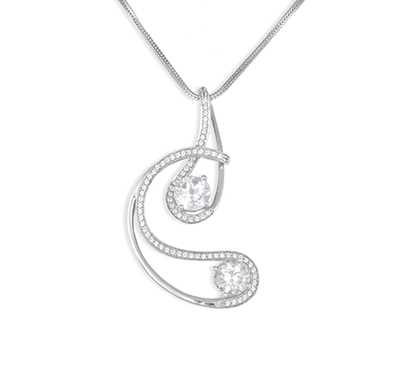 The Indian jewellery sector has come a long way from the earlier days when it manufactured the traditional jewellery designs of yesteryears for the domestic market; and followed the buyer’s designers for the export market. With technological improvement and designing taking the forefront in jewellery manufacturing, Indian manufacturing companies are on par with technologically advanced country in the world … sometimes even better.
India boasts some of the leading exporters of precious jewellery, for instance A’Star Jewellery, the jewellery division of Asian Star Co.Ltd boasts of a 40,000 sq ft state-of-the-art manufacturing facilities in India. The company is into mass production as well as customized and offers a vast portfolio of gold and platinum jewellery of contemporary , traditional as well as fusion styles. Besides bridal and daily wear jewellery, the company also creates innovative couture jewellery. CVM Exports is a popular manufacturing specialists in handmade studded jewellery, deal in both ethnic and contemporary styles using gems like uncut diamonds, rose-cut diamonds, villandi, parabs, and other gemstones. Their jewellery is available in leading showrooms all over the world.
In a recent survey, the Associated Chambers of Commerce and Industry of India and Thought Arbitrage Research Institute recently came to the conclusion that the Indian gems and jewellery sector requires both the government and industry members to drive innovations in new designs, processes and skill development of work force, to sustain in global markets. With the advent of globalization, consumer preferences have rapidly changed; and demand for new and innovative designs are increasing by the day. Such a scenario therefore calls for Indian manufacturers to adopt new methods and engage in building and marketing their brands in the global market, to meet the growing demand for branded jewellery overseas.
Currently, the Indian gem & jewellery industry provides employment to around 0.46 million people and this may increase to more than 0.82 mn by 2020, adding over 0.35 mn new jobs. The Industry and the Government should come together to start training institutes and create national centres of excellence for this purpose. What the industry needs is a collective investment in skill development, by introducing training and manpower development programs.
For decades India's Gems and Jewellery sector has been contributing in substantially to the country's foreign exchange earnings. Being one of the largest exporters of gems and jewellery in the world, the country exports to UAE, US, Singapore, Hong Kong, Russia, Latin America and China. The overall exports from the Indian gem and jewellery sector stood at $ 3.51 billion during June 2016, indicating an increase of 4.03 per cent over the $ 3.37 billion exported in June of the previous year. Gold jewellery exports (studded and plain) for June 2016 rose by 27.24 per cent to $ 769.09 mn as against $ 604.43 mn a year earlier. Exports of silver jewellery rose to $ 292.00 million in June 2016 as compared to $ 274.78 mn last year. This indicates the opening up of the consuming markets and thus effectively increasing demand for India made jewellery.
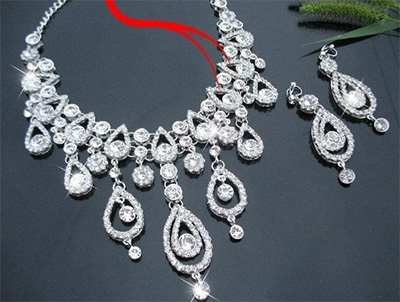 Today, India is the preferred hub of the global jewellery market because of its position as a source for varied and most exquisite jewellery products. Buyers from all over the world make a bee line to the jewellery shows in India, most importantly to the IIJS, which is organised by the Gem & Jewellery Export Promotion Council of India.
At IIJS 2016, one can see every type of jewellery manufacturers, exporters, local wholesalers, retailers …the works! Some Industry leaders who would stand out in the crowd would be Gold Star Fine Jewellery LLP, which uses sophisticated technology in manufacturing high-end designer jewellery for bridal as well as regular wear. The company’s jewellery is studded with different qualities and shapes of diamonds for the discerning consumer. And Jewelex, a global leader in the industry, have their presence across the value chain from manufacturing and trading loose diamonds to manufacturing and retailing diamond jewellery. The company is one of the top five jewellery exporters of India. Also, KGK Creations (India) Pvt Ltd, a complete value chain enterprise since 1905, is into diamond, gemstone and jewellery business. Another company to shine at the show will be Kama-Schachter Jewelery Pvt Ltd headquartered in Mumbai with offices scattered across Japan, Hong Kong, China and USA. The company’s expertise in the art of designing, manufacturing, exporting and marketing of diamond jewellery is well known. Its four factories in India and Hong Kong are equipped with state of the art technology. Companies like Kiran Jewels (India) are highly focused on their business and make waves with their innovative approach, be it in designs or technology. The company owns a well-equipped, high-tech jewellery manufacturing facility in Surat. Strengthened by the parent company, Kiran Gems, this jewellery unit has established a leadership position in the jewellery market. And, there is Priority Jewels Pvt Ltd, the ever growing company, which is one of the top brands in diamond jewellery in India. Using the latest technologies, the company offers high quality jewellery in innovative designs.
In recent years, the domestic jewellery sector has witnessed changes in consumer preferences. Demand for innovative designs and varieties in jewellery by consumers is on the increase. Taking the cue, the market savvy jewellers have been able to fulfil this changing demands. With increase in per capita income, purchasing power of consumers have gone up multifold. This translates into increase in sales of jewellery throughout the year; but more during festivals and wedding seasons.
There are countless jewellery companies catering to the domestic markets, most of whom will be participating in the IIJS 2016. To name a few, Bhindi Manufacturers, which is another reputed jewellery manufacturing house and is a dream come true for connoisseurs of antique polka diamond jewellery. Sanghi Jewellers Pvt Ltd of Hyderabad manufactures studded jewellery --a fusion of latest innovations and fine craftsmanship -- with state-of-art-technology. Sawansukha Jewellers Pvt Ltd are one of the leading wholesalers and retailers of jadau and diamond jewellery in Eastern India. Popular for its exceptional designs, the company is an Awards winner for exceptional designs from GJEPC, GJF and Oscar Awards and the list goes on….
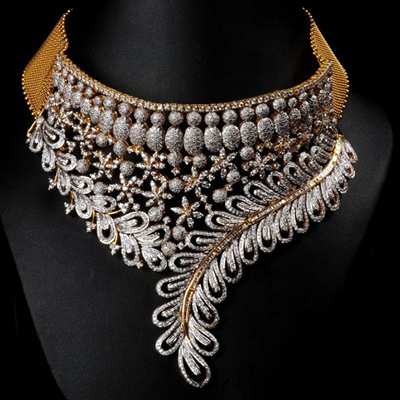 In the coming years, major changes are expected in India with the GJEPC coming out with many initiatives to help grow the jewellery sector. A jewellery park on Thane-Belapur Road has been proposed to boost the Mumbai-based jewellery industry by providing modern facilities and services. The Indian Institute of Gems & Jewellery (IIGJ) Mumbai, a project of GJEPC, will conduct a three-year Graduate Program in Jewellery Design & Manufacturing Techniques. In collaboration with Welingkar Institute of Management Studies, a course in management has also been introduced -- a boon to youngsters who wish to enter the industry well equipped.
In India, the online jewellery market has evolved over the years. Metropolitan cities such as Mumbai, Delhi, Chennai, Pune and Bangalore are driving the growth. Intrigued by lucrative prices of online jewellery, young Indians between 24-35 years are driving demand for online jewellery in the country. Though there are more than 20 e-commerce companies operating in this domain, the competition in online jewellery market has remained concentrated among few major players. The market is dominated by Carat Lane, which has recently been acquired by Tanishq, a Tata Group company, which also has an online presence. The online jewellery market presently accounts for less than 0.1 percent of the $55 billion jewellery industry. Another leader in the Online space is Bluestone.com, which is growing at a rate of 100-110% quarter on quarter in terms of revenue. Many more companies are entering the ecommerce space, but it will take many more years for this sector to mature. Right now, entry level jewellery pieces are the ones that are moving well; brick and mortar retailers still monopolize the high-end jewellery business as Indians prefer to visit a store for big buys like bridal/couture jewellery. Analysts expect the online jewellery business to reach around $3 billion in the next 5-10 years.
However, the Brick and mortar retailers in India are doing well despite e-commerce boom, having grown at an annual rate of 24% in the past five years. The India diaspora still believe in visiting a store, especially for high end jewellery. The online retail space may have expanded at a much faster rate of about 60% in fiscal 2015, but the pieces sold online are mainly entry level jewellery. While online jewellery business growth has been driven partly by large discounts, the established brick and mortar retailers have shown an unprecedented focus on profitability. So, the Brick and mortar stores are here to stay for a long, long time… at least in India.
Aruna Gaitonde, Editor-in-Chief of Asian Bureau, Rough & Polished
