Tanzania introduced a mineral policy in 2009 that gives much emphasis on value addition to minerals especially gemstones, rocks and precious metals such as gold and silver.
The policy to the ban on exports of rough tanzanite weighing more than 5 grammes in 2010 to create much needed tax revenue, and to promote jobs and skills for Tanzania.
The Arusha Gem Fair (AGF) committee, in line with the mineral policy and Tanzania Development Vision 2025, started raising funds in 2012 to train local women in mineral value added skills such as lapidary, jewellery designing and manufacturing technology.
Objectives of the lapidary and jewellery technology programme included to impart technology to women that would add value to gemstones, silver and gold in the country, to produce women graduates who are self-enterprising and able to meet the challenges of the gemstone industry in the country, as well as to develop self-realisation and entrepreneurship skills that would enable the women graduates to be self-employed and result into socio-economic development.
“We started raising the funds for women in 2012 when we held the first AGF and the aim was to empower women so they can be self-reliant and get employed through value addition of gemstones,” chairperson of the sub-committee for AGF women foundation fund Salim Salim told Rough & Polished in an interview.
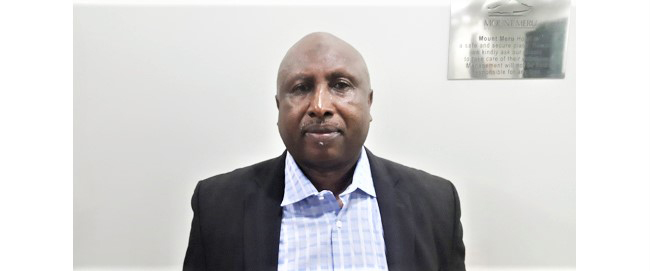
AGF Sub-Committee chairperson for Women Foundation Fund, Salim Salim
The programme had been implemented utilising the existing Tanzania Gemological Centre (TGC) infrastructure and equipment.
“We are using the facilities of TGC and you know TGC is under the ministry of minerals and energy,” he said.
“They are using those facilities because of the policy of Tanzania.”
He said 47 women had already graduated since the start of the programme with 18 still undergoing the practical course.
The whole programme takes seven months.
After acquiring skills, Salim said, some had found employment in Arusha and Dar es Salaam, while others had formed a group to start their own ventures.
He said AGF was planning to give them assistance through the government.
Asked to explain the form of assistance they intend to offer, Salim said: “We have to give them capital to buy equipment.”
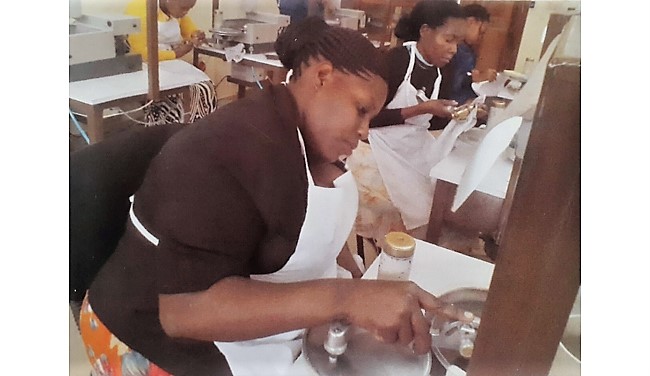
Some of the women receiving training in lapidary and cutting (Photo credit: AGF)
He also said that the training was not only limited to women but had been extended to cover small scale miners.
“We have been giving them grants to train in cutting and polishing of gemstones,” said Salim. “We have a programme to teach them gemological sciences so that they can identify gemstones and know which gemstones are economical and how to value them etcetera.” Salim said they would also start a training programme in jewellery design and manufacturing to allow locals design and manufacture jewellery such as rings and necklaces.
“This [course] applies to both men and women and it will cost not more than $2000 per each course and the short course is six months long,” he said.
“Its only women who are getting sponsorship through the AGF, while men should pay the fees [on their own].
“It’s going to start first of July and we will have instructors from India.”
He said AGF had already entered into an agreement with the Indians who were expected in the country end of May.
Asked to give a diagnosis of the country’s of beneficiation, Salim said: “Frankly speaking value addition is still in its infancy stage and we are lacking experts in that field. What we are doing is to build capacity. We are doing it slowly and we cannot compete with India they are very far from us. We believe that slowly we are going to build this industry and it will work after a long time of course.”
Mathew Nyaungwa, Editor in Chief of the African Bureau, Rough&Polished
