A new report covering the U.S. industrial sectors dedicated to the manufacturing and distribution of fine jewelry estimates the domestic U.S. fine jewelry market to be approximately $4 billion, measured at the wholesale value of products sourced and produced by domestic jewelry manufacturers, http://www.israelidiamond.co.il writes. Fine jewelry, as defined by the report, includes rings, bracelets, earrings, pins, necklaces, and other items manufactured from precious and exotic metals, diamonds, gems, and semi-precious stones, and excludes watches, costume jewelry, and various gold and silverware.
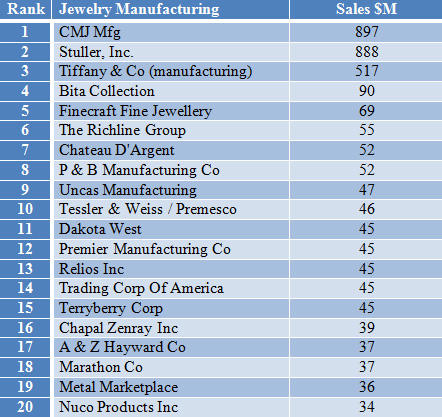
The report finds that there are more than 2,000 independent U.S.–based jewelry manufacturing enterprises, many of which are very small enterprises. Research by Corporate Finance Associates (CFA) identified about 700 manufacturers with reported revenues greater than $2 million. A list of the top 25 manufacturers can be found below.
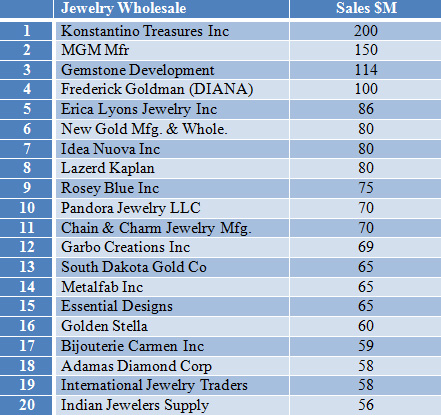
Approximately 55% of the products from these manufacturers are sold to distributors that re-sell to the retail sales channel, who focus primarily on serving bricks-and-mortar customers. Of more than 5,000 enterprises that distribute jewelry, diamonds, gemstones, and precious metals, CFA identified over 2,000 jewelry distributors with revenues over $2 million. A list of the top 25 distributors can be found below.
Outside of the traditional distribution channel, approximately 35% of jewelry is sold directly from the manufacturer to the retailer. Another 10% of the market is served directly from the manufacturer to catalog sales, multi-level marketing sales, and sales over the internet.
Industry trends
The last five years have been tough on the jewelry manufacturing industry. A combination of economic recession, increasing precious metal and gem prices, and increasing foreign competition have driven the total industry sales down from $5½ billion to $4 billion over the last ten years. This represents a negative 4% per year growth rate. Industry projections indicate that this erosion may stabilize when consumer confidence stabilizes, with a forecast for a slight increase in 2011 and 2012, resulting in a negative 1% per year decline in revenues over the next five years.
The effect of this decline is shown more clearly in the reduction of the number of manufacturers over the same period. Between 2001 and 2010, nine hundred U.S.-based manufacturers were sold or closed, representing a 5% annual decrease in the number of companies. This trend is projected to continue, with the loss of another two hundred to three hundred companies by the year 2015.
The good news
If there is good news in this, it is that those companies that continue in business will grow from the loss of competitors. Between 2001 and 2010, average size of manufacturing companies increased from $3.1 million to $3.6 million. If the projected trends in industry revenues and enterprises continue, average business size will increase to $3.9 million by 2015. Those that continue will grow by acquiring good, smaller companies, or simply picking up business from those that fail.
Offshore manufacturing
Over the last five years, competition from overseas manufacturers has increased. Labor and wages represent roughly 14% of cost for domestic U.S. manufacturers and jewelry has a low freight-to-value cost. This means that offshore manufacturers can save on labor and airfreight product quickly to the U.S. market. Domestic manufacturers are facing increasing competition from overseas producers. Many U.S. based companies are building offshore factories or developing relationships with overseas companies to reduce their costs.
Top industry companies
The top 20 manufacturers and wholesale companies are listed below. Distinctions between manufacturers and distributors are somewhat blurred in this industry. Many manufacturers also distribute product made by other companies. The classification is intended to show where the predominance of a company's sales are derived. The CFA list excludes companies that produce and sell student jewelry, including Balfour, Herff-Jones, American Achievement, and Jostens.
TOP 20 JEWELRY MANUFACTURERS
TOP 20 WHOLESALE / DISTRIBUTORS
Based on a spotlight research paper from CFA Research
