India, the world's largest diamond-cutting center, reduced its export of polished diamonds in a significant way in 2012*. Such conclusions can be drawn upon a closer look at the metrics published by the Indian Gem and Jewellery Export Promotion Council (GJEPC), which released its data for December 2012 last week. The decline in polished exports was a probable result of the devaluated rupee and liquidity crisis hitting Indian diamantaires and could be also caused by a drop in demand for diamond jewelry last year in comparison with 2011.
However, prices for polished diamonds exported from India in 2012 grew by an average of almost 14% compared to the average prices in 2011.
Polished exports
According to the statistics, India exported 33.6 million carats (46% less than the previous year) worth about $ 17 billion (down 39%) in 2012.
Last December, India exported 2.025 million carats of diamonds worth about $ 950 million.
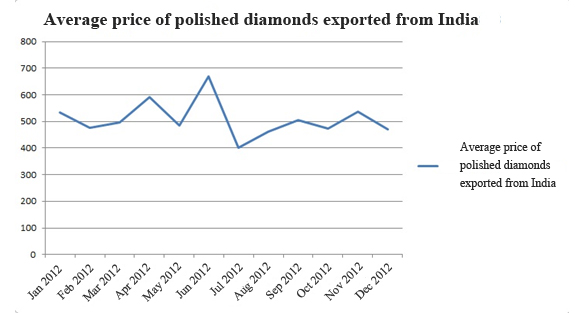
The average price of polished diamonds exported from India in December ran at $ 469 per carat. However, their annual average price was higher than that - $ 504.9 per carat. The average price of polished diamonds exported from India in 2011 was $ 443.8 per carat - that is, Indian polished diamonds turned more expensive by 13.8% in 2012.
Price movement for polished exports from India is shown in the graph below:
Rough imports
Rough diamond imports to India increased by 17% in 2012 compared with 2011 to about 150 million carats. In particular, in December 2012 India imported 18.53 million carats of rough –almost by 10 million carats more than in November.
The total value of rough diamonds imported to India in 2012 was close to $ 15 billion against $ 14.5 billion in 2011.
It means that the average price of rough diamonds imported to India was $ 99.5 per carat by the end of 2012. After they peaked to more than $ 110 per carat in the first half, rough import prices decreased in the second half.
Price movement for rough imported to India during 2012 is shown in the graph below:
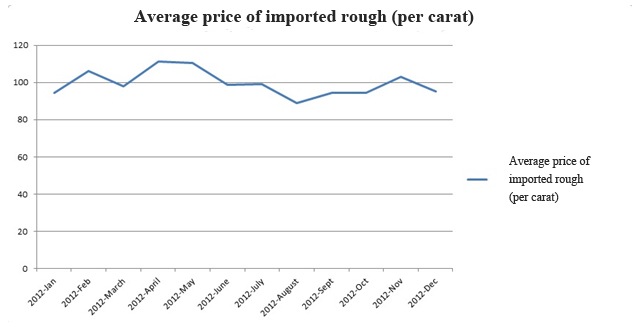
Lower prices for rough at increased volumes of purchases mean a shift in demand for small-size or pique goods - that is, to the cheaper range.
Yelena Levina for Rough&Polished
* Note: The data given here for 2012 involves statistics from January to December, but officially GJEPC closes the fiscal year in March.
